Plastic-Free Packaging: How Custom Tissue Paper Fits a Zero-Plastic Strategy
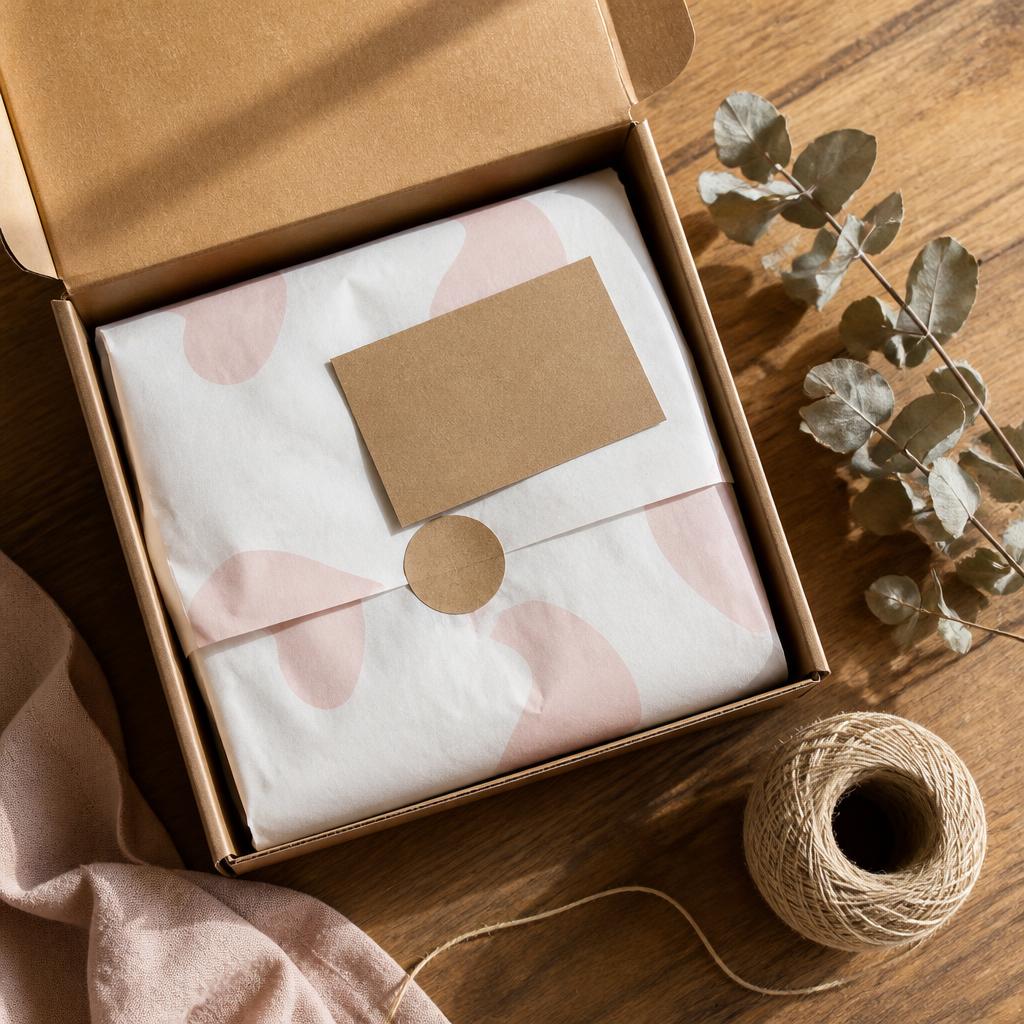
"Plastic-free" is one of the most over-promised words in packaging. Half the brands using it ship parcels with poly mailers, plastic tape, or polyethylene-lined cardboard. They mean well; they''ve just inherited a supply chain built around plastic.
This guide goes layer by layer through a typical e-commerce parcel and shows you what to swap, what''s harder than it sounds, and where custom printed tissue paper does the most useful work.
Why "plastic-free" matters more than ever in the UK
UK customers are paying attention. The Extended Producer Responsibility (EPR) fees that now apply to packaging suppliers reward materials that are easy to recycle and penalise those that aren''t. The plastic packaging tax adds further cost to anything containing less than 30% recycled content.
For small brands, the practical effect is that plastic costs more than it used to and tells your customers a story you probably don''t want to tell.
A typical parcel, layer by layer
Let''s audit a standard e-commerce parcel and replace plastic where it matters.
1. The outer mailer
- Polythene mailer → swap for a kraft mailer, padded paper mailer (Macfab, Priory Direct), or a small cardboard box.
- Pros: Fully recyclable. Reads as premium. Holds branded stickers better.
- Watch: Padded paper mailers are heavier — check your postage tier.
2. The tape
- Plastic tape → swap for kraft paper tape or water-activated tape (WAT).
- Pros: Goes in the same recycling stream as the box. WAT in particular seals very securely.
- Watch: Paper tapes don''t stick well to dirty or dusty surfaces. Keep your packing area clean.
3. The void fill
- Bubble wrap or air pillows → swap for scrunched kraft paper, honeycomb paper wrap or crumpled custom tissue paper.
- Tissue paper is unbeatable here if you want the void fill to also brand the parcel. A few crumpled sheets of 17 or 30gsm printed tissue protects fragile items while reinforcing your identity.
4. The product wrap
- Plastic poly bag → swap for custom printed tissue paper, paper bags or compostable cellulose film.
- This is where printed tissue paper carries the brand and replaces the most visible plastic in the parcel.
5. The stickers and seals
- Plastic stickers → swap for uncoated paper stickers or kraft labels.
- Most printers now offer recyclable paper stickers with similar performance to vinyl for indoor and short-life outdoor use.
6. The thank-you card or insert
- Already plastic-free for most brands. Just check the print finish — high-gloss laminate technically counts as plastic. Soft-touch or uncoated finishes are friendlier.
Where tissue paper does the most work
Two of the six layers above can be replaced with custom printed tissue paper alone — the wrap and the void fill. That''s why brands chasing a plastic-free aesthetic almost always over-order tissue and under-order everything else: it''s pulling double duty.
If you''re only going to upgrade one layer this quarter, make it the wrap. It''s the layer the customer sees first when they open the box, and it carries the strongest brand signal.
FSC certification: what to ask for
If you''re going to call your packaging plastic-free and sustainable, the paper itself should come from responsibly managed forests. Look for tissue suppliers that print on FSC-certified stock and can give you the chain-of-custody certificate on request.
Most reputable suppliers (we''re one) print on FSC tissue as standard. If a supplier can''t name the certification, that''s a flag.
A few things FSC alone doesn''t cover:
- The inks. Ask if they''re water-based or soy-based.
- The transport. Domestically printed tissue beats imported tissue every time on carbon footprint.
- The end-of-life. Plain or single-colour printed tissue is easily recyclable. Heavy ink coverage isn''t a problem in most UK kerbside collections, but extreme designs covered edge-to-edge in solid ink can flag at sorting.
What "plastic-free" doesn''t fix
Be honest with your customers about the limits.
- A plastic-free outer doesn''t make a plastic product sustainable.
- Switching to paper packaging slightly increases weight, which slightly increases transport emissions per parcel.
- Recycled paper isn''t always greener than virgin FSC paper, depending on the recycling and bleaching process.
Telling that story openly tends to build more trust than blanket "100% eco" claims that don''t hold up under questioning.
A realistic 90-day plan
If you''re starting from a standard plastic-heavy stack, here''s a sensible order to swap things in:
- Month 1: Replace product wrap with custom printed tissue. Replace tape with kraft paper tape.
- Month 2: Replace bubble wrap with crumpled tissue or honeycomb paper. Replace plastic stickers with paper stickers.
- Month 3: Replace poly mailers with kraft or padded paper mailers. Update product page copy and shipping email to tell the story.
By month three you''ll have a parcel that''s genuinely plastic-free, photographs well, and gives you something useful to put in your brand story.
Pricing reality check
A common worry is that going plastic-free will double packaging costs. In practice, for most small UK brands shipping 50–500 parcels a month, the move adds roughly 10–25p per parcel once you''ve optimised quantities. Custom printed tissue is the largest contributor at roughly 10p per sheet at sensible volumes — and it''s also the layer most likely to convert into reorders through better unboxing experiences.
Get started
Design your tissue paper in the builder or talk to our team if you''d like advice on putting together a fully plastic-free packaging stack.