Acid-Free Tissue Paper: What It Is and When You Need It
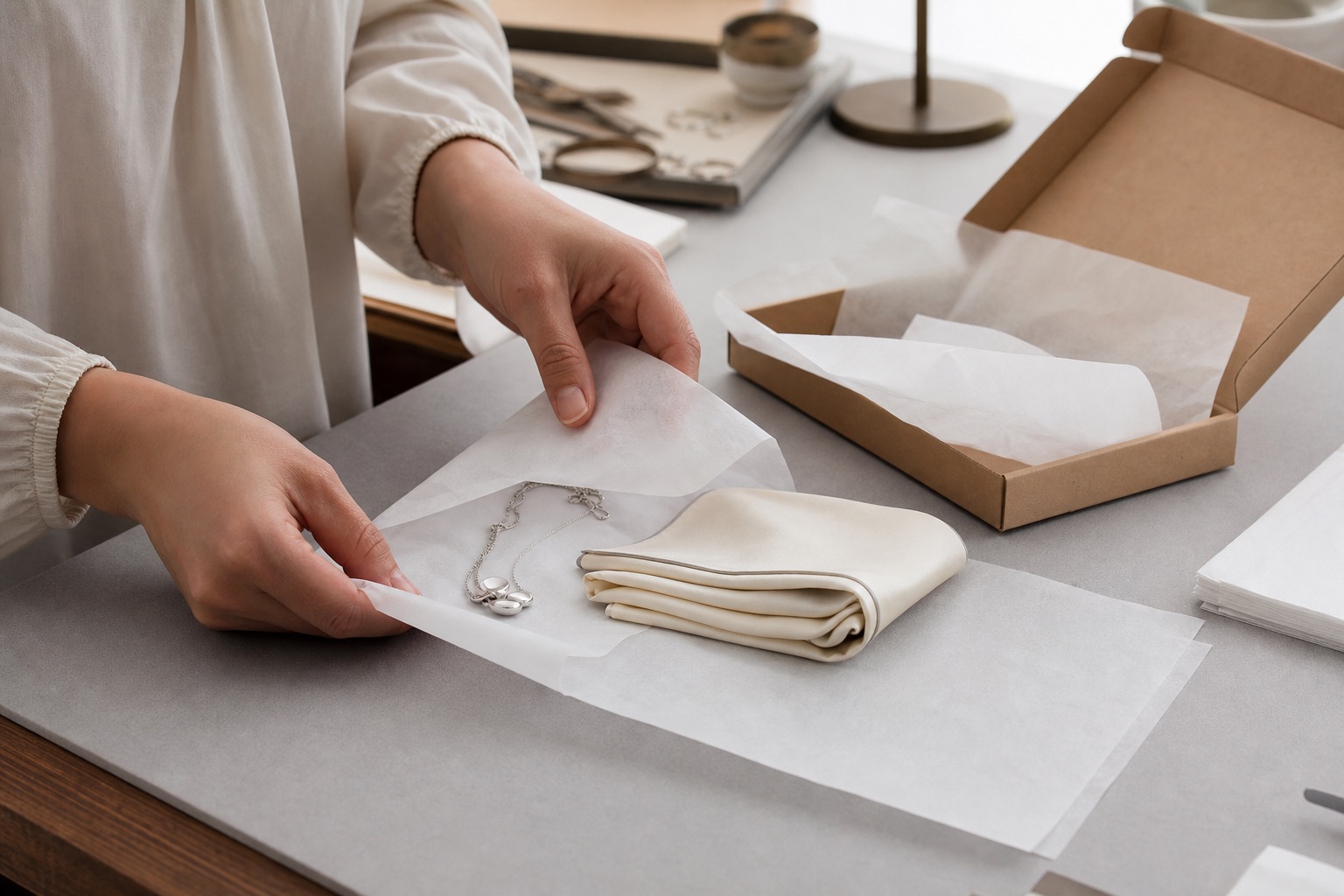
Acid-free tissue paper is made so that it does not introduce damaging levels of acidity to the product it touches. That matters when paper will sit against materials that can tarnish, yellow, weaken or discolour over time.
For normal ecommerce presentation, the phrase can sound more technical than it needs to be. The practical questions are:
- What are you wrapping?
- How long will it remain wrapped?
- Could the product react with ordinary paper, dye or moisture?
- Is the tissue being used for presentation, storage or both?
A silver necklace stored for months deserves more care than a cotton T-shirt wrapped for a two-day delivery. This guide explains the difference without treating every parcel like a museum archive.
What does acid-free mean?
Paper is generally described as acid-free when it is manufactured to have a neutral or slightly alkaline pH rather than an acidic one. The pH scale runs from 0 to 14:
- Below 7 is acidic.
- 7 is neutral.
- Above 7 is alkaline.
The exact specification matters more than the marketing phrase. For long-term conservation, buyers may need test standards, fibre information and a known pH range. For retail packaging, the main goal is usually to avoid a paper that contributes to tarnishing, yellowing or material degradation during ordinary storage and delivery.
“Acid-free” does not automatically mean:
- Archival for every object.
- Food-safe.
- Recyclable.
- Bleed-resistant.
- Lignin-free.
- Buffered.
- Suitable for decades of conservation storage.
Those are separate properties. A responsible supplier should not use one claim as shorthand for all of them.
Why can acidic paper cause problems?
Some paper contains acidic compounds from raw materials or manufacturing. Over time, acids can contribute to the breakdown of cellulose in the paper itself and may affect sensitive items in contact with it.
The familiar example is an old newspaper becoming yellow and brittle. That change does not happen instantly, and packaging tissue is not newspaper, but it demonstrates why paper chemistry matters in long-term contact.
Potential concerns include:
- Tarnishing of silver and some metal finishes.
- Yellowing of pale textiles or paper objects.
- Transfer of degradation products to artwork or documents.
- Embrittlement during long storage.
- Interaction with dyes, coatings or moisture-sensitive surfaces.
Risk depends on the product, environment and length of contact. Temperature, humidity, pollutants and poor storage can be as important as the tissue itself.
When does a business genuinely need acid-free tissue?
Jewellery and silverware
Jewellery is one of the clearest retail uses. Acid-free tissue creates a clean contact layer around pouches, boxes and metal items. It is particularly relevant when products may remain boxed for weeks or months before sale.
Tissue alone does not prevent all tarnishing. Silver reacts with sulphur-containing compounds in the environment, so long storage may require purpose-designed anti-tarnish materials and controlled conditions. Acid-free tissue is a good baseline, not a complete conservation system.
Our jewellery packaging guide covers practical wrapping, sizing and transit decisions.
Clothing and textiles
Acid-free tissue is useful between folds, around pale garments and inside boxes used for storage. It can help prevent hard creases and keeps the textile away from rough card surfaces.
For a standard ecommerce journey, the benefit is mainly confidence and presentation. For bridalwear, vintage garments, costume collections or products stored seasonally, the paper specification becomes more important.
Delicate protein fibres such as silk and wool deserve careful supplier advice, especially for long-term storage. Conservation guidance often distinguishes between buffered and unbuffered tissue for different materials.
Artwork, prints and photographs
Paper artwork and photographs should not be wrapped in ordinary decorative tissue for long-term storage. The correct material depends on the medium, surface, inks and intended storage period.
Acid-free interleaving can be useful, but “acid-free gift tissue” is not automatically photographic or conservation-grade. If the work is valuable or irreplaceable, follow advice from a paper conservator or a specialist archival supplier.
Books, stationery and paper goods
Acid-free tissue can separate premium stationery, protect book covers from light rubbing and improve presentation. It is especially useful for limited editions and goods expected to remain boxed.
Make sure printed tissue ink is fully suitable for contact with the surface. A textured or freshly printed book cover can scuff even when the tissue itself is chemically appropriate.
Ceramics, glass and collectibles
Tissue provides a soft surface layer around glazed ceramics, glass and decorative objects. Acid-free stock is sensible where objects may be stored wrapped.
It does not provide meaningful impact protection by itself. Use an appropriate cushioning and box system outside the tissue. The tissue protects the finish and presentation; the structural packaging manages movement and shock.
Everyday fashion, beauty and ecommerce products
Acid-free tissue is a reassuring specification for regular product packaging, but not every ordinary item will visibly suffer if wrapped briefly in other good-quality paper. The value is consistency: one suitable tissue stock can serve many product categories without the business having to decide which items are sensitive.
That makes acid-free paper a practical default where the supplier can verify the specification and the cost suits the packaging budget.
When acid-free tissue may not be enough
Choose a more specific material or obtain expert advice when:
- The object is valuable, historic or irreplaceable.
- Storage is expected to last for years.
- The product contains unstable dyes or finishes.
- Metal tarnishing is a major risk.
- The tissue will touch wet, oily or greasy goods.
- Direct food contact is intended.
- Photographs or fine art need archival storage.
- The environment is humid or polluted.
Packaging claims should follow the actual end use. “Acid-free” is useful information, but it cannot answer every safety question.
Buffered versus unbuffered tissue
Buffered tissue contains an alkaline reserve, commonly added to counter acids that may develop or enter the storage environment. It can be appropriate for many paper-based materials.
Unbuffered tissue is acid-free but does not contain that alkaline reserve. It is commonly preferred for some sensitive textiles, photographs and objects where an alkaline buffer may be unsuitable.
For normal branded retail packaging, many buyers will never be asked to choose between the two. For conservation or long storage, the distinction matters and should be discussed with a specialist.
Do not select buffered tissue simply because it sounds “more protected”. Suitability depends on the object.
Acid-free versus lignin-free
Lignin is a natural component of wood. If it remains in paper, it can contribute to yellowing and acidity as the paper ages.
Lignin-free or low-lignin paper is important in archival contexts, but an acid-free claim does not always tell you everything about fibre composition or long-term ageing. Ask for a technical specification if longevity is the reason for buying.
For short-life ecommerce packaging, a verified acid-free tissue may be entirely appropriate without commissioning a conservation report. The level of evidence should match the risk.
Acid-free versus recyclable
These terms answer different questions:
- Acid-free describes the paper's chemistry and likely interaction with products.
- Recyclable describes whether the material can enter an appropriate recovery stream.
An acid-free tissue can be recyclable. A recyclable tissue is not necessarily certified acid-free. Coatings, foil, glitter, contamination and local collection rules affect disposal independently of pH.
Read our UK tissue paper recycling guide for disposal considerations. Environmental claims should be specific and supported, not bundled together because they sound positive.
Acid-free versus food-safe
Acid-free does not mean food-safe.
Paper intended for direct food contact needs an appropriate specification for that use. Inks, coatings, migration, grease resistance and the type of food all matter. A sheet suitable for wrapping a jewellery pouch is not automatically suitable for direct contact with a pastry.
For food packaging, use a product specifically supplied for the intended contact and ask for the relevant declaration or documentation. Our standard wrapping tissue and our grease-resistant food packaging options serve different jobs.
Does coloured acid-free tissue bleed?
Acid-free chemistry does not guarantee colourfastness or bleed resistance.
Dark or heavily dyed tissue can transfer colour under pressure, friction or humidity, especially against pale textiles and porous surfaces. Before placing a large order:
- Wrap the real product.
- Apply light pressure similar to a packed box.
- Leave it for the expected storage time.
- Repeat the test in a slightly humid environment if that reflects delivery conditions.
- Inspect pale and textured surfaces carefully.
White tissue with a suitable printed logo is often the lower-risk choice for delicate light products. The print still needs to be fully dry and appropriate for the application.
Does printed tissue remain acid-free?
Printing does not automatically remove an acid-free paper's useful properties, but the finished product is a system: base paper plus ink and any coating.
Ask what ink is used and whether the supplier's statement applies to the finished printed tissue or only to the unprinted base sheet. Avoid assuming that metallic effects, flood coverage or specialist finishes behave exactly like a simple one-colour print.
For most branded retail uses, a restrained logo repeat on an appropriate base paper is easier to specify and test than dense coverage.
How to assess tissue paper before ordering
Ask for the specification
Useful questions include:
- Is the tissue acid-free?
- Is a pH range or test method available?
- Is it buffered or unbuffered?
- What fibre is it made from?
- Is it suitable for my named product?
- Is it bleed-resistant?
- What inks will be used?
- Does the claim apply after printing?
- Is direct food contact permitted?
A supplier may not have conservation-level data for a retail packaging product. That is acceptable if the claim and intended use are described honestly.
Request samples
Handle the material. Look for:
- Surface dust.
- Unexpected odour.
- Dye or ink transfer.
- Roughness against polished surfaces.
- Creasing behaviour.
- Opacity.
- Tearing at folds.
Use the Big Tissue sample pack to compare paper feel and print before a custom run.
Test with the real product
Do not test tissue only around an empty box. Contact with the product is the point.
For metal, inspect for marks after storage. For textiles, test pale fabric and textured finishes. For artwork, speak to an appropriate specialist. For candles and cosmetics, check for oil, fragrance or coating interaction.
Record the approved combination
Once paper, ink and product have been tested, record the tissue specification and supplier. That makes repeat ordering safer and prevents staff substituting an unknown decorative paper during a stock shortage.
Choosing paper weight
Acid-free tissue is available in different weights. GSM measures mass per square metre, not acidity.
A lightweight paper may be ideal for draping around garments and small retail products. A heavier tissue may give more opacity and surface separation. Neither is inherently “more acid-free”.
Choose weight according to handling and presentation:
- Use lighter tissue for soft folds, garments and economical everyday wrapping.
- Use heavier tissue when more body, opacity or resistance to tearing is useful.
- Use specialist grease-resistant paper where oils or food contact demand it.
Our tissue paper GSM guide explains the practical differences.
Storage matters after delivery
Good tissue can be undermined by poor storage.
Keep stock:
- Flat rather than crushed.
- Dry and away from external walls prone to condensation.
- Away from direct sunlight.
- Clear of chemicals, fragrances and workshop dust.
- In its protective outer packaging until needed.
- Off the floor.
Use older stock first and inspect it if storage conditions have changed. Paper absorbs moisture and odours from its environment.
Common misconceptions
“Acid-free means it lasts forever”
No packaging material lasts forever in every environment. Acid-free is a useful property, not an immortality guarantee.
“White tissue is automatically acid-free”
Colour tells you very little about pH. Ask for the specification.
“Recycled tissue cannot be acid-free”
Fibre source and pH are separate questions. Recycled content may require careful processing and specification, but the terms are not mutually exclusive.
“Acid-free tissue stops silver tarnishing”
It reduces one avoidable source of harmful contact, but silver tarnishing involves environmental chemistry. Long-term protection may require anti-tarnish materials and controlled storage.
“Any acid-free tissue is archival”
Archival suitability depends on more than a general acid-free claim. Valuable collections need specialist materials and advice.
Frequently asked questions
Is acid-free tissue paper safe for jewellery?
It is a sensible contact and presentation layer for jewellery, especially compared with unknown decorative paper. For long-term storage of silver or sensitive finishes, combine it with appropriate anti-tarnish and environmental controls.
Do clothes need acid-free tissue paper?
For short ecommerce delivery, it is a good-quality default rather than a universal necessity. It becomes more important for pale, delicate, vintage or long-stored garments.
Can I use acid-free tissue for photographs?
Do not assume ordinary retail acid-free tissue is photographic archival material. Use a specialist product recommended for the photographic process and storage period.
Is acid-free tissue safe for food?
Not on that claim alone. Direct food contact requires a product specifically supplied and documented for the intended use.
Can acid-free tissue be custom printed?
Yes, subject to the base paper and printing system. Confirm that the finished printed product remains suitable for your application and test it against the real item.
The practical recommendation
Use verified acid-free tissue as a strong default for jewellery, clothing, stationery, collectibles and premium retail products—particularly where stock may remain wrapped. Treat it as one part of a packaging specification, not a promise that covers food safety, archival storage, colourfastness and recyclability.
Tell your supplier exactly what the tissue will touch and for how long. A useful answer should name limitations as well as benefits.
If you need branded acid-free tissue for ordinary retail or ecommerce packaging, build your tissue online or send us the product details so the specification can be checked.