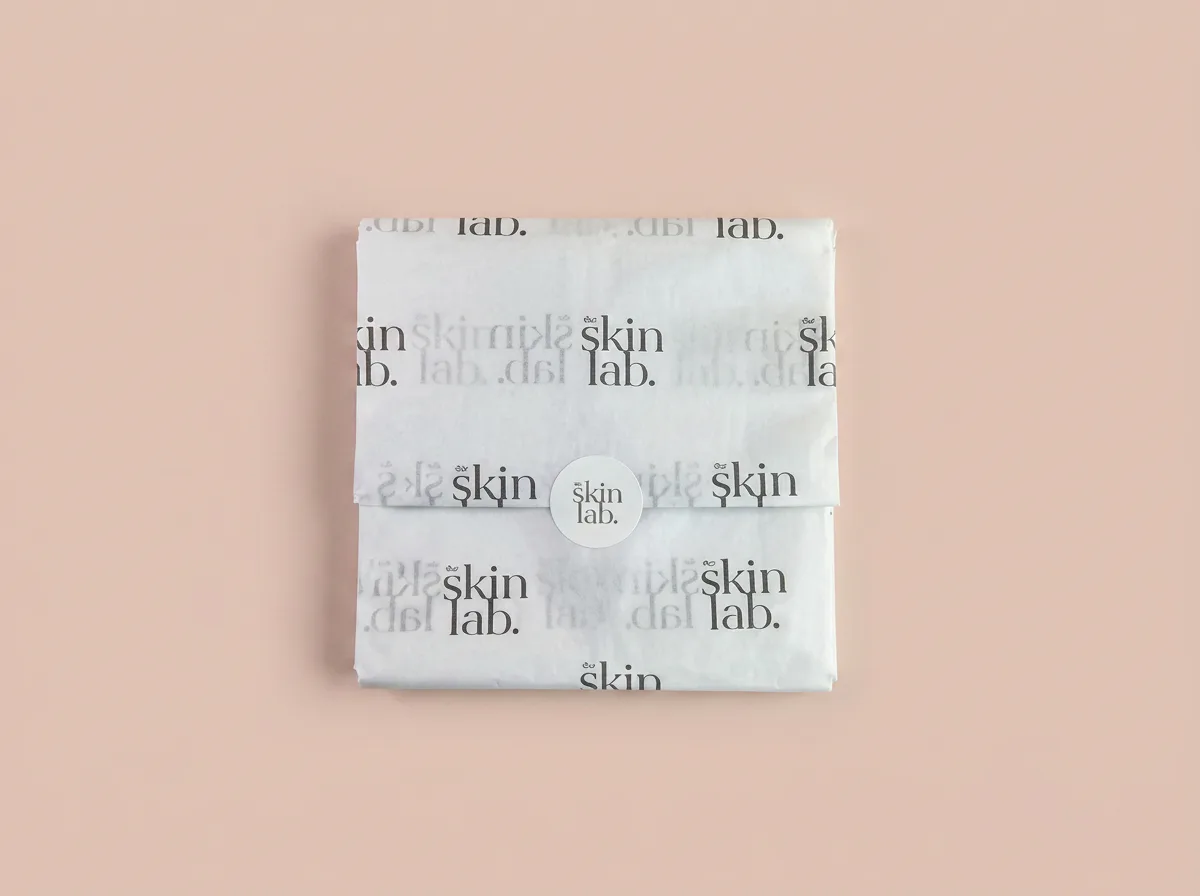
Can printed tissue paper be recycled?
The answer depends on the local collection and the material. For example, Cornwall Council accepts tissue used in packaging or gift wrapping, while Westminster’s guidance says to put tissue paper in household rubbish. These differences are why a universal recycling instruction is unhelpful.
Check the recipient’s local authority or waste collector for wrapping tissue specifically. Rules for cardboard, office paper and used facial tissues may be different. In Ireland, check the collection provider’s instructions for your address; do not assume that UK guidance applies.
- Reuse clean sheets for another gift or as a protective layer where suitable.
- Remove tape, ribbons and other attachments where possible.
- Check whether the collection accepts the exact type of tissue and its condition.
- Keep wet or food-soiled material out of a clean-paper stream unless the collector explicitly accepts it.
- If tissue is excluded, follow the collector’s stated disposal route.
Recycle Now’s wrapping-paper guidance explains that some collections reject thin or decorated wrapping papers and that tape and non-paper finishes can cause problems. Its scrunch test is a useful clue for some wrapping papers, not proof that your local service accepts tissue.
What the environmental terms actually mean
| Term | What it describes | What to ask |
|---|---|---|
| Responsibly sourced | How raw materials are obtained | What sourcing evidence applies to this stock? |
| Recycled content | Material recovered before or after use | What percentage, and is it pre- or post-consumer? |
| Recyclable | Potential recovery into another material | Does the actual collection accept this finished sheet? |
| Biodegradable | Breakdown through biological activity | Under which conditions and over what time? |
| Compostable | Suitability for a defined composting process | Is the finished print supported for home or industrial composting? |
| Acid-free | A property of the paper’s acidity | What is the stock specification? It is not a disposal instruction. |
A recycled sheet is not necessarily accepted for further recycling. A paper from responsibly managed forests is not necessarily made from recycled fibres. Compare the same property across products rather than treating different claims as interchangeable.
For the distinction between everyday wrapping and specialist storage, see our acid-free material guidance.
FSC labels and Big Tissue’s sourcing position
FSC labels describe the forest-based material in a labelled product. In brief, FSC 100% identifies material from FSC-certified forests; FSC Recycled identifies verified recycled forest-based material; FSC Mix permits a combination of certified, recycled and controlled sources. These are different claims, as explained in FSC UK’s label guide.
Big Tissue is not itself FSC certified. A supplier’s certification does not automatically authorise us or a customer to put an FSC logo onto any finished order. If certified packaging is a requirement, ask us to confirm the claim and documentation available for the specific supply route before approving the artwork.
Keep the material specification and order documents with your purchasing records. If the next order changes paper or supplier route, check that the same evidence still applies.
Biodegradable does not automatically mean home compostable
Do not assume a finished printed sheet is suitable for a home compost heap because its base material is paper. Inks, coatings, adhesives and decorations form part of the finished specification. An industrial composting claim also does not automatically cover home composting conditions.
If compostability matters to your packaging plan, request evidence for the finished product and the intended composting route. Separately check that the collection operator accepts it. A material can meet a technical requirement and still be excluded from a local bin.
For example, the North London Waste Authority excludes packaging and paper from its food-waste collection. Use that as a reminder to check locally, not as a rule for every UK or Irish collection.
Inks, coatings and food-contact requirements
An ink’s carrier, such as water, does not by itself tell you whether a finished sheet is recyclable, compostable or suitable for direct food contact. Ask about the complete paper-and-print specification for the use you have in mind.
For simple retail wrapping, a logo repeat on white tissue can leave much of the surface unprinted. If you are considering metallic effects, coatings, glitter or laminated layers, check how those additions affect the intended recovery route before including them in the design.
Food packaging needs a separate suitability check. Provide the food type, temperature and contact time, and request the relevant information for the proposed printed material. The greaseproof guide explains what to include in that enquiry.
Reduce paper use without weakening the pack
Start with a packing trial. Measure whether a smaller sheet, fewer layers or a different folding method gives the same presentation. Keep appropriate cushioning for fragile products; reducing tissue is not useful if it increases product damage.
- Test the sheet size before increasing the weight or adding a second layer.
- Use a design that can remain in service beyond a short promotion.
- Store sheets dry and covered to avoid preventable damage.
- Order a realistic quantity rather than stock that may become obsolete after a rebrand.
- Ask about delivery packaging and consolidate orders when it suits your storage and demand.
Give customers specific, supportable guidance
A useful disposal message explains the next action. Avoid broad phrases such as “100% eco-friendly” or a blanket instruction to put every printed sheet in a recycling bin.
If you want to state recycled content, certification or compostability on your own packaging, request supporting information first and use wording that matches it. A UK business address alone does not establish where paper was made or printed, and a shorter route alone does not establish a lower overall carbon footprint.
Send us your sourcing requirements with the intended size, weight and print design so the right questions are part of your quote from the start.
Common questions
Can I put printed tissue in my recycling bin?
Only if your local collection accepts that type of wrapping tissue. Some councils accept it and others do not. Check the actual material and local instructions, remove attachments where possible, and reuse clean sheets first.
Is Big Tissue FSC certified?
No. Big Tissue is not itself FSC certified. If your order requires a particular certified material or label, ask us to confirm the specific claim and supporting documentation before ordering or adding a logo to the artwork.
Is printed tissue home compostable?
Do not assume so from the paper base alone. Ask for evidence covering the finished paper, inks and any coatings for the intended composting conditions. Collection services may exclude packaging even where a compostability claim exists.
Does using less tissue lower my carbon footprint?
Using a smaller sheet or fewer layers can reduce the amount of paper per pack, if the packaging still performs. Quantifying a carbon saving needs evidence about the full lifecycle; a paper-weight calculation alone does not establish it.
Continue planning your packaging
Use the right sheet size
Reduce excess folds with measured layouts.
Understand paper properties
GSM, acid-free tissue and specialist applications.
Plan a practical packing system
Avoid waste from overpacking and obsolete stock.
Build your buying brief
Include sourcing requirements alongside the print specification.