Branded Tissue vs Stickers, Shred and Wrapping Paper
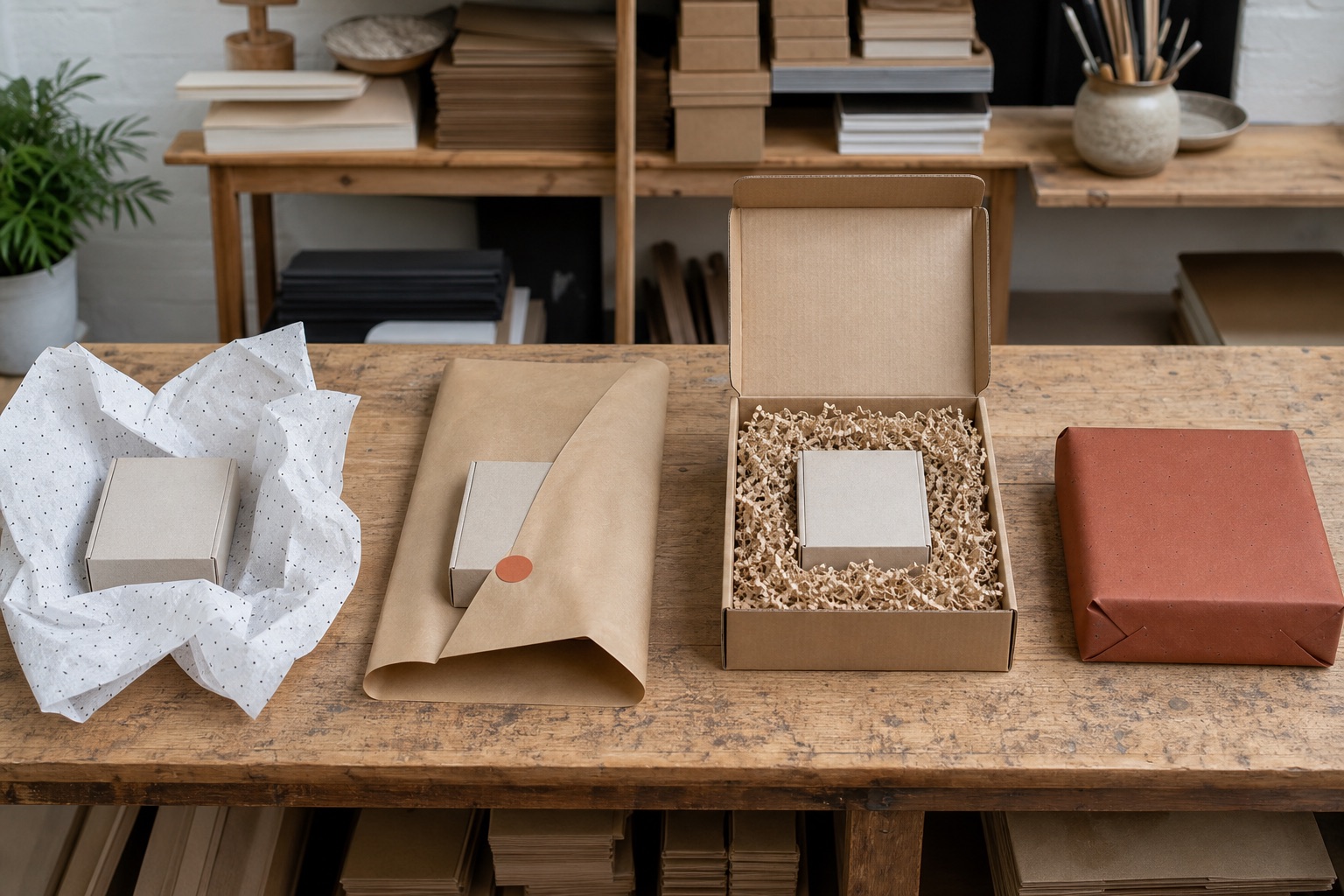
Branded tissue paper, stickers, paper shred and wrapping paper are often grouped together as “nice packaging”. They do different jobs.
- Tissue wraps, lines and separates.
- A sticker closes or labels.
- Shred fills space and cushions light products.
- Wrapping paper creates a more structured outer presentation.
Choosing well starts with the packaging problem, not the trend. A small jewellery brand may benefit from tissue and one seal. A heavy ceramic item needs structural protection before any decorative layer. A busy shop may value speed more than an elaborate online unboxing.
This guide compares the materials honestly so you can build a packaging system rather than a pile of extras.
The six questions to ask
Compare each option against:
- Function: What physical job must it do?
- Presentation: What should the customer see and feel?
- Speed: How long does it add at the packing bench?
- Cost per order: Not simply cost per pack.
- Storage: How much space and organisation does it require?
- End of life: Can the customer separate and dispose of it easily?
No single material wins every category.
Branded tissue paper
Custom tissue can:
- Wrap a product.
- Line a box.
- Separate surfaces.
- Conceal the product for a reveal.
- Carry a repeating logo.
- Add light padding around soft goods.
Strengths
Large branded surface: One sheet can show the mark several times without adding cards or labels.
Flexible use: The same stock can work across retail bags, mailer boxes and product wraps.
Low storage depth: Flat sheets store efficiently when kept dry and protected.
Lightweight: Tissue adds little shipping weight.
Fast with a standard fold: One sheet and one closing motion can produce a complete presentation layer.
Limitations
Not structural cushioning: It does not reliably protect fragile products from impact.
Can tear: Undersized sheets, sharp corners and tight wrapping create damage.
Needs planning: Size and average sheets per order determine real cost.
Print is substrate-dependent: Colour looks different from coated board or a screen.
Best for
- Clothing.
- Jewellery pouches and boxes.
- Cosmetics cartons.
- Books and stationery.
- Boutique retail.
- Subscription boxes.
- Gift and ecommerce presentation.
Branded stickers
Stickers are small adhesive brand carriers. They can close tissue, seal a paper bag, identify a product or add short-run campaign messaging.
Strengths
Low entry quantity: Digital stickers can often be produced in small runs.
Easy versioning: Different products, seasons and messages can use separate designs.
Strong colour: Label stock can reproduce detail and colour more predictably than tissue.
Compact storage: Rolls and sheets occupy little room.
Useful closure: One component can hold a tissue fold and carry the logo.
Limitations
Small brand area: The customer sees one label, not a full printed surface.
Adhesive compatibility: A strong sticker can tear tissue; a weak one can open in transit.
Application time: Peeling and positioning every sticker becomes meaningful at volume.
Material separation: Film labels or laminated finishes may complicate recycling.
Best for
- Closing plain or branded tissue.
- Very small test runs.
- Product labels.
- Seasonal campaigns.
- Takeaway bags.
Paper shred
Shredded paper fills open space and supports a “nest” presentation inside a box.
Strengths
Fills irregular spaces: Useful around small items in a larger presentation box.
Tactile reveal: Products can sit visibly in the material.
Flexible quantity: Staff can add more or less depending on the order.
Available plain or coloured: It can support a palette without custom printing.
Limitations
Mess: Customers may spill it; staff must manage loose material.
Inconsistent use: Handfuls are difficult to standardise, so cost per order drifts.
Storage volume: Shred occupies much more space than flat tissue.
Not dependable for heavy goods: It compresses and shifts.
Can obscure small products: Jewellery and accessories disappear inside it.
Best for
- Hampers.
- Lightweight gift sets.
- Presentation boxes with visible products.
- Short runs where custom inserts are not justified.
Wrapping paper
Wrapping paper is heavier and more opaque than tissue. It creates crisp folds and full concealment.
Strengths
Structure: Holds defined folds around boxes.
Opacity: Hides the product and underlying retail carton.
High-impact design: Supports detailed all-over print and seasonal artwork.
Familiar gift cue: Customers immediately recognise a wrapped present.
Limitations
Slower application: Measuring, cutting, folding and taping takes time.
More material and weight: Particularly around products already inside boxes.
Less forgiving: Poor folds and tape placement show clearly.
Storage: Rolls require space and can be damaged at the edges.
Potential duplication: It may wrap a retail box that then enters another shipping box.
Best for
- Paid gift wrapping.
- Premium retail counters.
- Seasonal gifts.
- Rectangular boxes.
- Occasions where full concealment matters.
Which option is cheapest?
Compare cost per completed order, including labour.
For each material:
Material cost per order + application time × labour rate + expected waste
A sticker costing pennies can become less economical if it adds fiddly handling to thousands of parcels. Tissue with a higher purchase total may cost less per order when it wraps in one fast motion.
Example:
- Tissue: 22p per sheet, two sheets = 44p.
- Sticker: 6p.
- Packing time: 25 seconds.
Direct presentation material is 50p before labour.
If wrapping paper costs 35p per cut piece but takes 75 seconds, it may cost more operationally despite lower material spend.
Use your own supplier prices and a realistic labour rate. Do not use headline “from” prices with an order quantity your business will not buy.
Our custom tissue paper cost guide explains how quantity changes the tissue calculation.
Which is fastest to pack?
Typical order, from fastest to slowest:
- One tissue liner or top sheet.
- Envelope tissue wrap with one sticker.
- Pre-measured shred in a box.
- Full wrapping paper with cutting and tape.
Your process may differ. Time ten orders rather than debating it.
Pre-cutting, bench layout and product consistency matter more than small differences in folding technique.
Which provides the best protection?
None should be treated as the main transit protection for a fragile product.
- Tissue provides surface separation and light scuff protection.
- Stickers provide closure or tamper indication only if designed for it.
- Shred can reduce light movement but compresses.
- Wrapping paper protects presentation surfaces and adds modest tear resistance.
Structural protection comes from the correctly specified primary pack, inserts, cushioning and transit box. Tissue can sit inside that system and still create the customer-facing reveal.
Which looks most premium?
“Premium” comes from restraint, fit and execution.
A single sheet of well-sized branded tissue can look better than:
- Three colours of shred.
- Two stickers.
- Ribbon.
- A card.
- An oversized gift box.
Likewise, crisp wrapping paper can be right for an intentional gift service, while loose tissue would feel unfinished.
Choose one leading material and let other components support it. Competing decorative layers create visual noise and cost.
Which is easiest to store?
Tissue
Stores flat and efficiently but must remain dry and uncrushed.
Stickers
Very compact. Adhesive stock should be kept away from heat and contamination.
Shred
Bulky. Open containers spread loose pieces and make stock counts difficult.
Wrapping paper
Rolls need horizontal or vertical storage that protects edges. Cut sheets need large flat space.
If premises are small, calculate cubic storage as well as purchase quantity.
Which is easiest for customers to recycle?
The simplest pack is often easiest to understand.
Plain uncoated paper components may be accepted in paper recycling when clean, but local collection rules vary. Foil, glitter, plastic film, heavy coatings, food contamination and mixed-material labels change the answer.
Good practice:
- Minimise unnecessary components.
- Avoid vague claims.
- Give disposal instructions only when verified.
- Make different materials easy to separate.
- Do not label every paper-like item “compostable” without evidence.
See is tissue paper recyclable? for a UK-focused discussion.
Tissue plus sticker: a useful combination
This is common because each component has one clear job:
- Tissue wraps and carries the pattern.
- Sticker holds the final flap.
Keep the sticker small enough not to dominate. Test the adhesive against the actual printed tissue. The opening should feel controlled, not destructive.
If tissue is already strongly branded, a plain paper seal may be enough. If tissue is plain, the sticker can carry the main mark.
Tissue plus shred: when it works
Use tissue as a liner or product wrap and a measured amount of shred only where light space filling is needed.
Avoid placing a tissue-wrapped item into an ocean of shred. It adds materials without improving the reveal. A fitted box or insert may be more efficient at regular volume.
Set a measured scoop or target weight for shred. “One handful” varies between staff.
Tissue plus wrapping paper: usually too much
There are exceptions, but fully wrapping a retail box in branded tissue and then wrapping it again in gift paper often duplicates effort.
A better hierarchy might be:
- Tissue for normal orders.
- Wrapping paper only for a paid gift option.
Or:
- Tissue inside the retail box.
- Gift wrap outside it for special occasions.
Make sure each layer creates a distinct benefit.
Choosing by business type
Ecommerce clothing
Start with a one- or two-sheet tissue wrap. Add a small seal only if needed. Shred is generally messy around textiles, and full gift wrap slows dispatch.
Jewellery
Place the item in a pouch or primary box, then use a small acid-free tissue wrap or liner. A seal can control the fold. Loose shred may swallow small items.
Candles and handmade goods
Use tissue for presentation, with engineered protection for glass or ceramics. Shred can suit lightweight gift sets but should be measured.
Physical retail
Tissue is fast inside bags. Wrapping paper can be reserved for gift service. Stickers can close bags or tissue.
Subscription boxes
A liner fold gives a repeatable reveal. Use a fitted insert for product organisation rather than relying entirely on shred.
Run a four-pack comparison
Pack the same product four ways:
- Tissue only.
- Plain tissue plus sticker.
- Shred presentation.
- Wrapping paper.
Record:
- Material cost.
- Packing time.
- Storage required.
- Finished parcel weight.
- Damage or movement after a transit test.
- Customer opening ease.
- Waste generated.
Photograph them in the same light. Ask people unfamiliar with the project which feels clearest and most appropriate—not simply which contains the most material.
Common comparison mistakes
Comparing purchase totals
Different pack quantities make totals meaningless. Calculate per order.
Ignoring labour
Complex gift wrap can cost more in time than materials.
Expecting presentation material to protect glass
Use a proper transit system.
Adding every affordable component
Small costs combine into an expensive, cluttered pack.
Choosing materials before box size
An oversized box creates a void-fill problem that better sizing could remove.
Treating recyclability as universal
Finish, contamination and local rules matter.
Frequently asked questions
Is branded tissue paper better than branded stickers?
They serve different jobs. Tissue provides a large wrapping or lining surface; a sticker is a small closure or label. They often work well together.
Is paper shred good protection?
It can reduce light movement around small products, but it compresses and is not dependable structural protection for heavy or fragile goods.
Is tissue paper cheaper than wrapping paper?
It can be faster and lighter, but compare your quantities, sheet use and labour. Wrapping paper may suit a paid gift service where its structured finish has clear value.
Do I need both tissue and a thank-you card?
Not necessarily. Tissue provides presentation and brand repetition; a card carries detailed information or a personal message. Use a card only when the content is useful.
What is best for a small business?
Begin with the minimum complete system: correctly sized transit packaging, one presentation material and a closure only if needed. Add components after testing.
The practical recommendation
Use tissue when you need a flexible branded wrap or liner. Use a sticker when you need closure or a small versioned message. Use measured shred for light space filling and visible product nests. Use wrapping paper for a deliberate gift service.
Do not ask one component to do every job, and do not use all four by default.
If tissue is the leading presentation layer, calculate how many sheets you need and build the printed specification online.