Tissue Packaging for Candles, Soap and Handmade Products
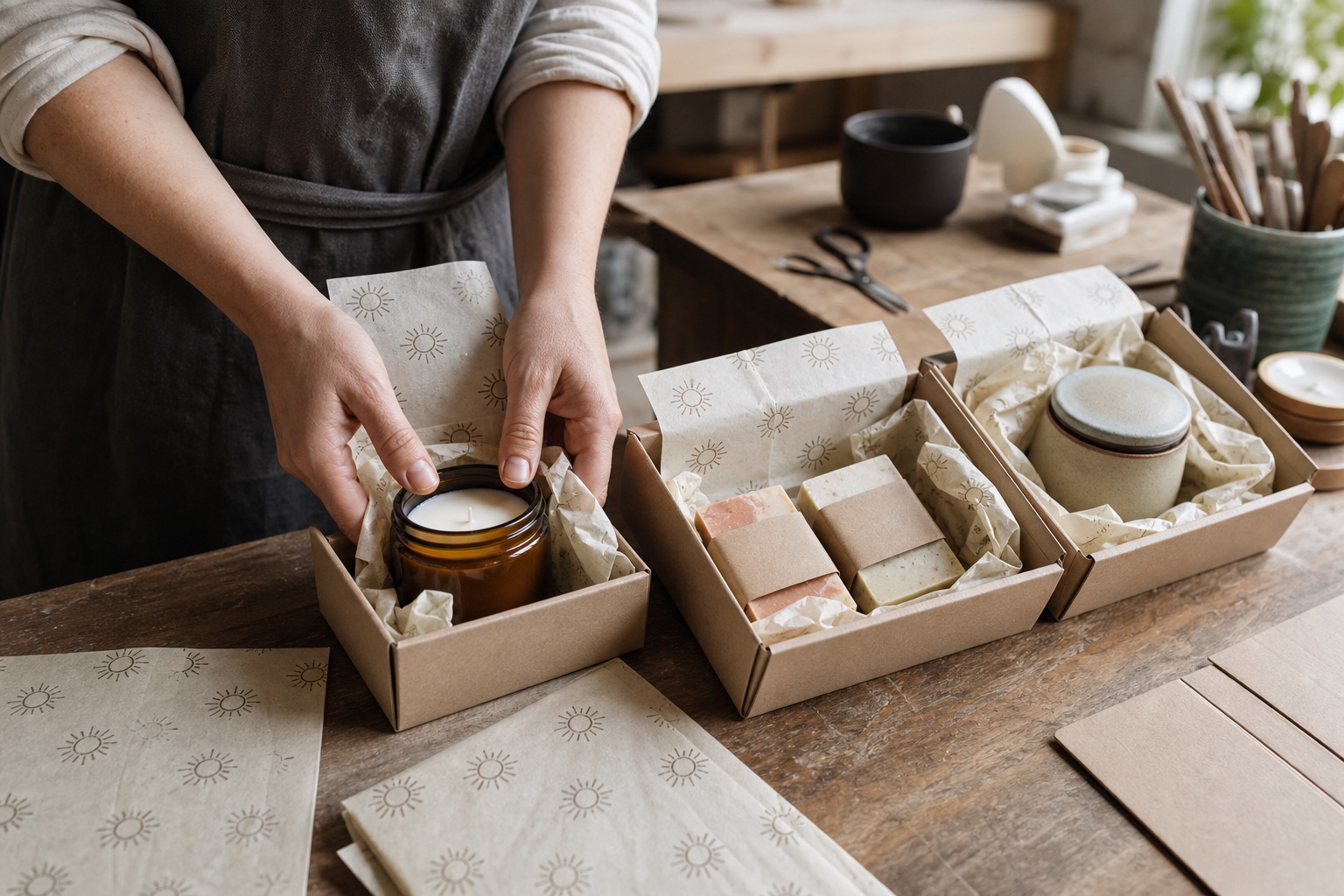
Handmade products often carry more packaging challenges than their size suggests. Candles combine glass, wax and fragrance. Soap can contain residual moisture and oils. Ceramics are heavy and brittle. Small-batch gift sets change from week to week.
Custom tissue paper can make these products feel considered and connect different ranges under one brand. It works best as a presentation and light surface layer inside a packaging system designed for the actual product.
The principle is simple:
Stabilise the product first, protect it second, present it third.
Tissue is usually part of the third step. Sometimes it helps with light surface protection in the second, but it does not replace a fitted insert or cushioning around glass and ceramics.
Start with product stability
Before wrapping:
- Candle wax should be set and the vessel clean.
- Lids should fit securely.
- Soap should be sufficiently cured and appropriately packed.
- Oils and balms should not leak.
- Ceramic surfaces should be clean and dry.
- Labels and finishes should have completed their required cure time.
Packaging a product too early can cause:
- Oil marks on tissue.
- Ink transfer.
- Labels lifting.
- Fragrance contaminating other orders.
- Moisture weakening paper.
- Dust sticking to surfaces.
Tissue cannot correct an unstable product.
Packaging candles
Glass container candles
A sensible sequence is:
- Clean and inspect the vessel.
- Secure or protect the lid.
- Apply a tissue presentation wrap or liner.
- Place the candle into a fitted insert or cushioning system.
- Use a correctly rated outer box.
- Test for movement and impact.
Do not rely on crumpled tissue to protect glass. It compresses and shifts. The candle needs engineered protection appropriate to its weight and courier journey.
Tin candles
Tins are less fragile than glass but can dent and scratch. Tissue can protect printed or coated surfaces from light rubbing. Keep lids secured and prevent tins striking each other in multi-item packs.
Fragrance considerations
Tissue absorbs fragrance. That may seem desirable around a candle, but it can:
- Transfer scent to other products.
- Create an overwhelming opening.
- Contaminate stored tissue stock.
- affect customers with fragrance sensitivity.
Store unused tissue away from finished candles and fragrance oils. Wrap only at the packing stage.
Packaging handmade soap
Soap should normally have its own appropriate primary wrap, band or carton before decorative tissue.
Questions to consider:
- Is the bar fully cured?
- Can oil or moisture migrate?
- Does it require ingredient or safety information?
- Will the tissue touch the bar directly?
- Is the ink suitable for that contact?
- Could fragrance transfer between scents?
Plain wrapping tissue is not automatically suitable for direct contact with every soap formulation. Test the actual bar and use the tissue around the primary soap pack where appropriate.
For mixed scent orders, wrap primary packs separately so one fragrance does not dominate the box.
Packaging ceramics
Tissue is useful against glazed or matte surfaces and creates a clean first reveal.
It is not sufficient cushioning for:
- Mugs.
- Small pots.
- Wax burners.
- Dishes.
- Ceramic ornaments.
Use a protective system that prevents impact and product movement. Tissue can sit directly around the clean product if tested, followed by the required cushioning.
Pay attention to protruding handles and thin edges. Tight tissue can tear across them and provide false confidence while the vulnerable area remains unprotected.
Packaging oils, balms and cosmetics
Check closure integrity before presentation wrapping.
Useful controls include:
- Tamper-evident components where required.
- Leak testing.
- Protective caps.
- Separate containment for liquids.
- Upright orientation.
- Absorbent or barrier material when the risk assessment requires it.
Tissue should not be expected to contain a leak. Oil can spread through several sheets, stain other products and weaken the outer box.
Choose one tissue design across the range
Makers often have many scents, colours and seasonal products. Printing separate tissue for each variant creates stock complexity.
An evergreen design might use:
- The main logo.
- A simple maker's mark.
- A neutral one-colour motif.
- No scent names.
- No dates.
- No seasonal message.
Use product labels and cards for variant information. Let tissue unify the range.
This makes it safer to buy an economical quantity and easier to pack mixed orders.
Logo pattern for handmade brands
Hand-drawn marks can reproduce well when simplified.
Watch for:
- Fine sketch lines.
- Tiny signature text.
- Watercolour transparency.
- Several similar earthy colours.
- Irregular details that close at small scale.
A one-colour production version can retain character without trying to reproduce every brush texture. Proof it at actual size.
Use the repeat logo pattern guide to choose scale and spacing.
Choosing a paper colour
White or cream
Works across changing product colours and gives reliable contrast with dark ink. It also makes oil marks easier to identify during testing.
Kraft or natural
Supports an earthy visual language but may reduce contrast for pale inks. Check whether the actual stock and fibre suit the product.
Brand colour
Creates impact but can compete with colourful soaps, labels and glazes. Dark dye should be tested against pale products and humid delivery conditions.
Black or deep colour
Can be dramatic around amber glass and pale ceramics. White ink may be softer than expected, and dark stock should not be assumed colourfast without testing.
Read white ink on coloured tissue before selecting a reverse logo.
Selecting the sheet size
Useful starting tests:
- 220 × 300mm: a small soap carton, sample tin or tiny accessory.
- 380 × 380mm: individual candle cartons, soap pairs, small ceramic items.
- 380 × 500mm: medium candles, gift sets and box liners.
- 500 × 500mm or 500 × 700mm: larger sets, clothing or mixed product boxes.
The box depth matters for liners. Product height matters for wraps.
Do not use a large sheet simply because it is the supplier's standard. Oversized tissue bunches around candle jars and consumes stock quickly.
Follow the tissue paper measuring guide and test a blank sheet first.
Paper weight
Lightweight tissue
Useful for:
- Soap cartons.
- Candle box liners.
- Small product wraps.
- Retail bags.
- Economical multi-item packing.
It drapes easily and creates soft gathers, but sharp carton corners can tear a tight wrap.
Heavier tissue
Useful for:
- More substantial presentation.
- Larger products.
- Added opacity.
- Surfaces needing a stronger separator.
It takes more space inside a tight box and may not gather as softly.
Choose weight after handling samples with the real product. Read the GSM guide for a full comparison.
Printed tissue and oil transfer testing
Run a simple controlled test:
- Pack the finished product exactly as proposed.
- Place it in the final box under normal compression.
- Store at room temperature for the expected pre-sale period.
- Repeat in a warmer condition if products may encounter summer delivery heat.
- Inspect tissue for translucent marks, ink movement and odour.
- Inspect the product label, vessel and neighbouring items.
Do not intentionally exceed product safety limits. Follow the maker's stability and packaging procedures.
Record date, batch and result. A photograph is more useful than “seemed fine”.
Mixed-product gift sets
Gift sets combine risks.
A candle, soap and ceramic dish may need:
- Separate primary packs.
- Dividers or a fitted insert.
- Tissue around each unit or one liner.
- Movement control.
- Fragrance separation.
- Clear product information.
Avoid wrapping every component in several sheets merely to stop movement. Redesign the internal structure.
A good opening sequence reveals the whole set without forcing the customer to unwrap a succession of unidentified bundles.
Markets and physical retail
Tissue can serve both ecommerce and in-person sales:
- Wrap purchased products at the stall.
- Line carry bags.
- Separate ceramics.
- Prepare gift orders.
Create a fast retail fold that staff can perform while talking to customers. Pre-cut or correctly sized sheets help.
Keep tissue protected from outdoor moisture, dust and fragrance exposure. A lidded flat box under the counter works better than an open stack.
Small-run economics
Custom tissue begins with preparation costs, so per-sheet pricing falls as quantity rises.
For a maker, the right run depends on:
- Monthly orders.
- Sheets per order.
- Market and wholesale use.
- Planned brand changes.
- Storage.
- Cash flow.
Use:
Orders per month × average sheets per order × months of cover
Then add a named wastage allowance.
Our quantity planning guide shows weighted examples, while the UK pricing guide explains current tiers.
Do not buy a year's seasonal design because the unit price looks attractive. An evergreen mark makes a larger run safer.
Packing speed
Handmade businesses often focus on material cost and overlook their own time.
Time ten orders:
- Fetch product and packaging.
- Inspect and secure the product.
- Fold tissue.
- Add protective components.
- Close and label the box.
Look for repeated cutting, searching for stickers and rewrapping. Standardise one method per product family.
The business tissue wrapping guide includes five repeatable folds and training advice.
Keep packaging tests linked to product batches
Handmade formulations and finishes can change. A tissue test completed with one soap recipe, vessel coating or label laminate may not cover the next version.
Record:
- Product and batch tested.
- Cure or fill date.
- Tissue specification and print.
- Packing date.
- Storage temperature.
- Inspection date.
- Any oil, fragrance, colour or adhesive change.
Retest after changing fragrance load, oils, vessel coating, label material or supplier. Keep one packed control sample from a normal production batch when practical.
This is especially useful when a mark appears after delivery. The record helps separate a paper issue from incomplete curing, leaking closures, heat exposure or a changed product component. It also prevents the team relying on an old informal test after the product has evolved.
Wholesale orders
Wholesale packing differs from individual ecommerce.
Retailers may need:
- Products grouped by SKU.
- Less individual presentation tissue.
- Outer carton protection.
- Easy stock counting.
- Packaging that arrives shelf-ready.
Ask the buyer how products will be unpacked. Individually wrapping every soap may slow their goods-in process and add material they remove immediately.
Use branded tissue where it protects or presents the wholesale unit, not automatically around every item.
Sustainability without vague claims
Handmade brands often value low-plastic packaging, but claims must match the actual material.
Check:
- Paper source.
- Ink and coating.
- Whether tissue is clean enough for paper recycling.
- Whether product oils contaminate it.
- Whether stickers can be separated.
- Local disposal differences.
Do not call a package “zero waste” simply because it uses paper. Right-sizing and avoiding unnecessary layers are more credible.
See our plastic-free packaging guide and recycling guide.
Common handmade-product mistakes
Wrapping before the product is stable
Wax, oil, moisture and ink can transfer.
Using tissue as glass protection
Use proper cushioning and structure.
Storing tissue beside fragrance
Paper absorbs odour.
Printing each scent separately
Inventory becomes difficult and leftover stock grows.
Oversizing the sheet
Small products disappear in paper.
Using too many rustic details
Tissue, shred, twine, card and dried flowers can create clutter and packing time.
Forgetting wholesale needs
Retail buyers may value speed and countability over individual wrapping.
A pre-order checklist
Confirm:
- Products are cured, sealed and stable.
- Tissue contact has been tested.
- Glass and ceramics have structural protection.
- Sheet size fits the actual packed product.
- Paper weight was sampled.
- Logo artwork is robust.
- Tissue design is reusable across the range.
- Average sheets per order are known.
- Packing time is acceptable.
- Stock will be stored away from fragrance and moisture.
Frequently asked questions
Can tissue paper touch handmade soap?
Do not assume ordinary printed wrapping tissue is appropriate for direct contact with every formulation. Use a suitable primary wrap and test the proposed system.
Does tissue protect candle jars in delivery?
It provides presentation and light surface separation. Glass jars need fitted cushioning and a suitable outer box.
What size tissue works for a candle?
Start with 380 × 380mm or 380 × 500mm for many individual candle cartons and test the actual height and fold. Smaller tins may need less.
Will candle fragrance transfer to tissue?
Paper absorbs odour. Wrap at the packing stage and store unused tissue away from fragranced stock.
How many tissue designs should a maker order?
Usually one evergreen brand pattern is more efficient than separate stock for every scent or product. Use primary labels for variant information.
The practical recommendation
Use tissue to unify the brand and create the reveal, while primary packs, inserts and transit boxes manage leaks, tangles, impact and movement. Choose one evergreen one-colour pattern, test it against finished products and size the sheet to the real pack.
When the system has passed contact and transit tests, build a small custom run online or send us the mixed-product specification.